Architecture becomes an active participant in the act of drinking coffee. The project explores the dialogue between materiality, light, and human presence, transforming an everyday ritual into an immersive architectural experience.
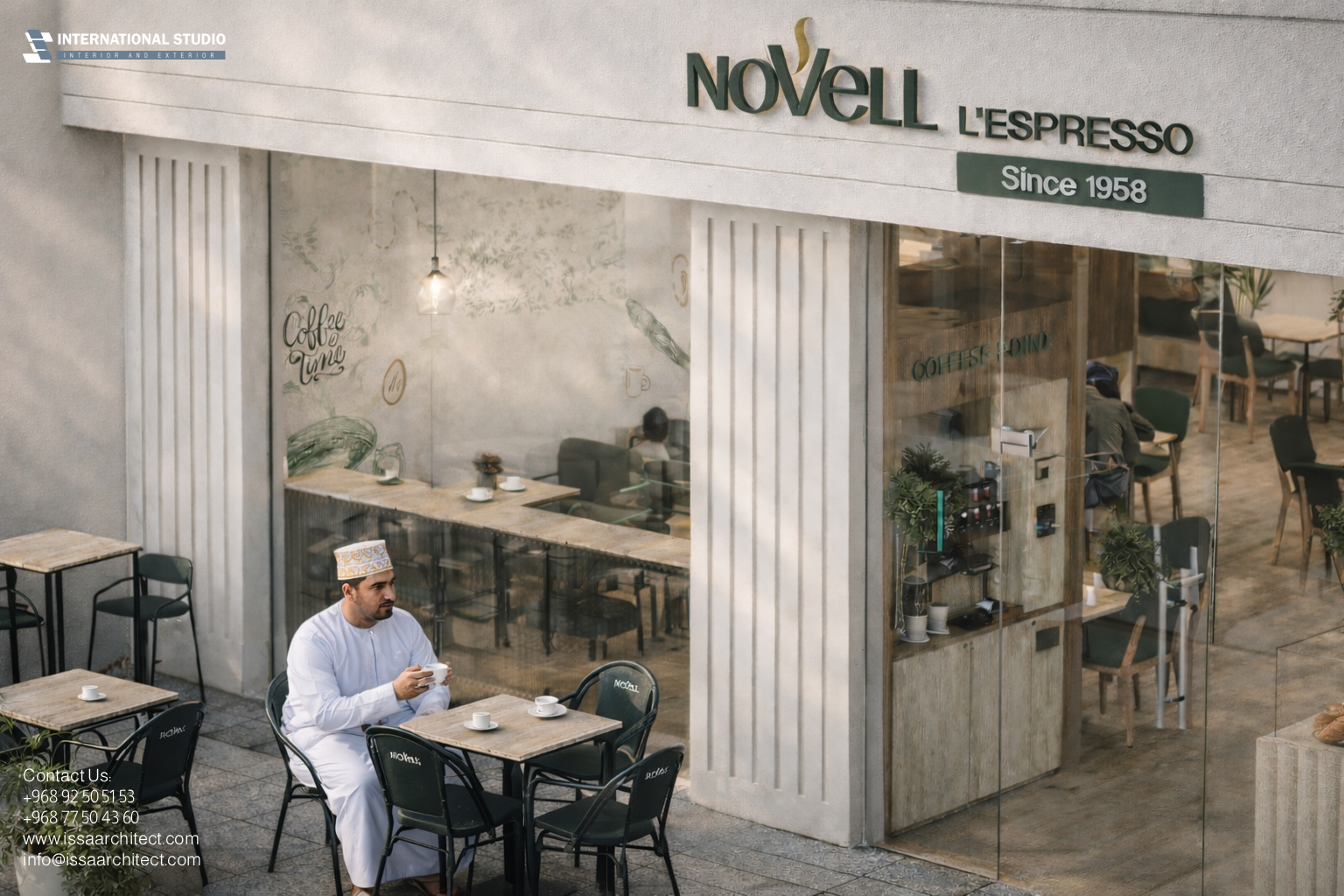
The design strategy prioritizes continuity between interior and exterior, employing a fully glazed façade that dissolves the boundary between public and private realms. This transparency allows the urban movement of Al Mouj to visually penetrate the space while maintaining a calm, introspective interior atmosphere. The glass envelope acts as both a window and a filter — inviting the city in, yet preserving the café’s intimate character.
Spatial Composition and Circulation
The interior layout is structured around a clear yet fluid circulation spine, guiding visitors naturally from the entrance to the seating and service areas. The arrangement avoids rigid zoning, instead favoring a soft gradation of spaces — from more social, open seating near the façade to quieter, inward-facing zones deeper within the café.
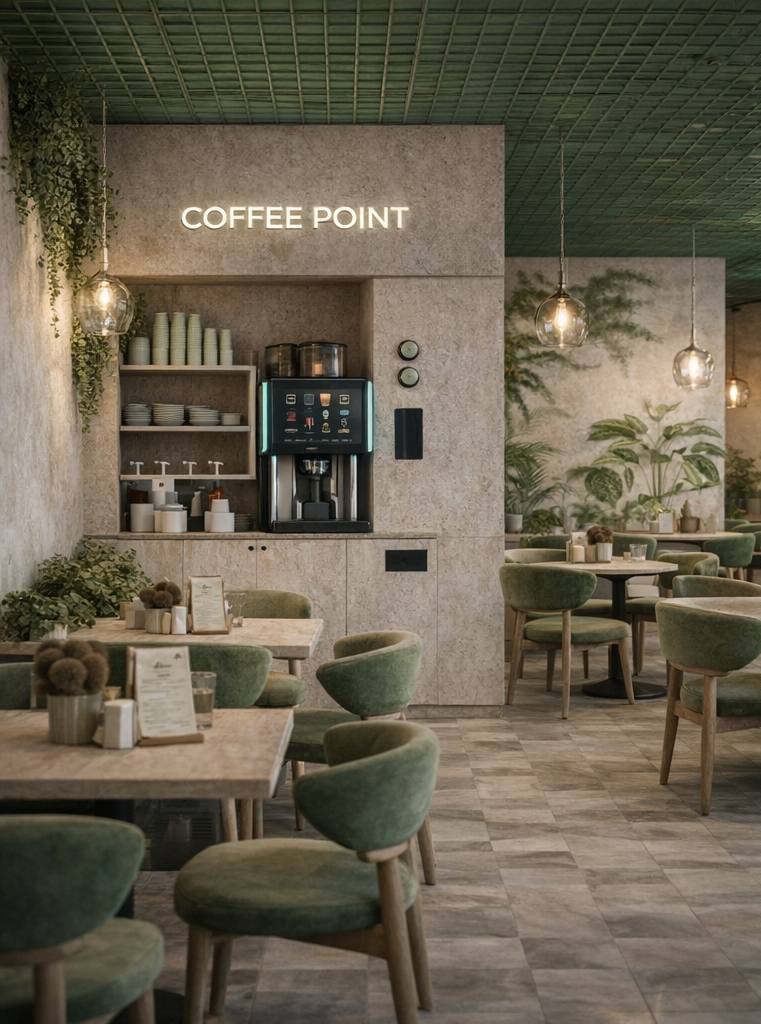
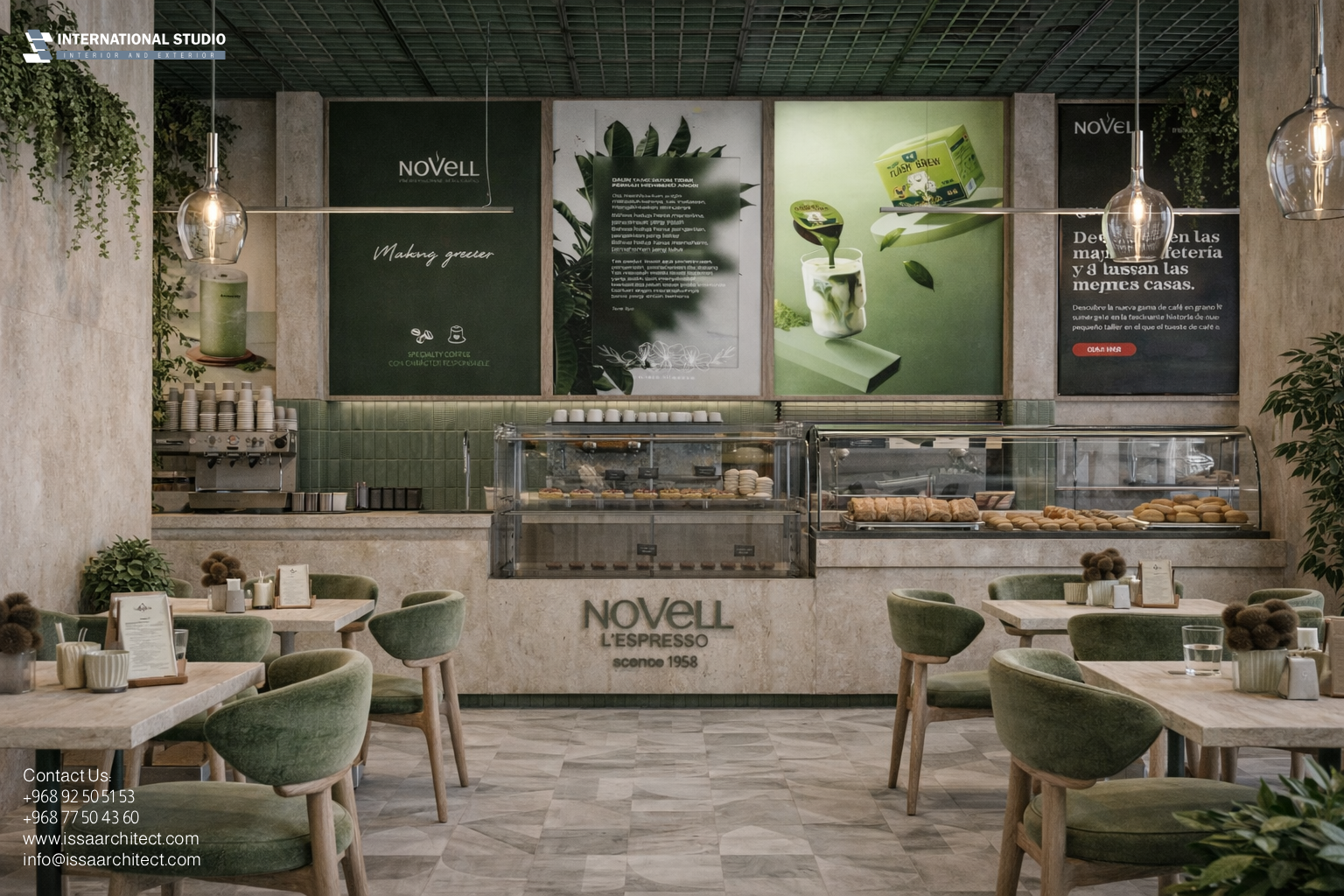
The central coffee station operates as the spatial anchor of the project. It is not hidden behind a service wall, but positioned as a visual and experiential focal point. The bar becomes both functional infrastructure and architectural centerpiece, reinforcing the ritual of coffee preparation as a performative act.
Materiality and Tactility
Material selection follows a coherent palette inspired by Oman’s natural textures. The stone flooring in warm, irregular tones introduces a sense of groundedness, while the textured wall finishes create visual softness and depth without excessive ornamentation.
Wood elements — visible in shelving, tables, and chair bases — introduce warmth and human scale, counterbalancing the neutrality of stone and concrete surfaces. The result is a tactile, layered environment that invites both visual and physical engagement.
Ceiling as a Fifth Facade
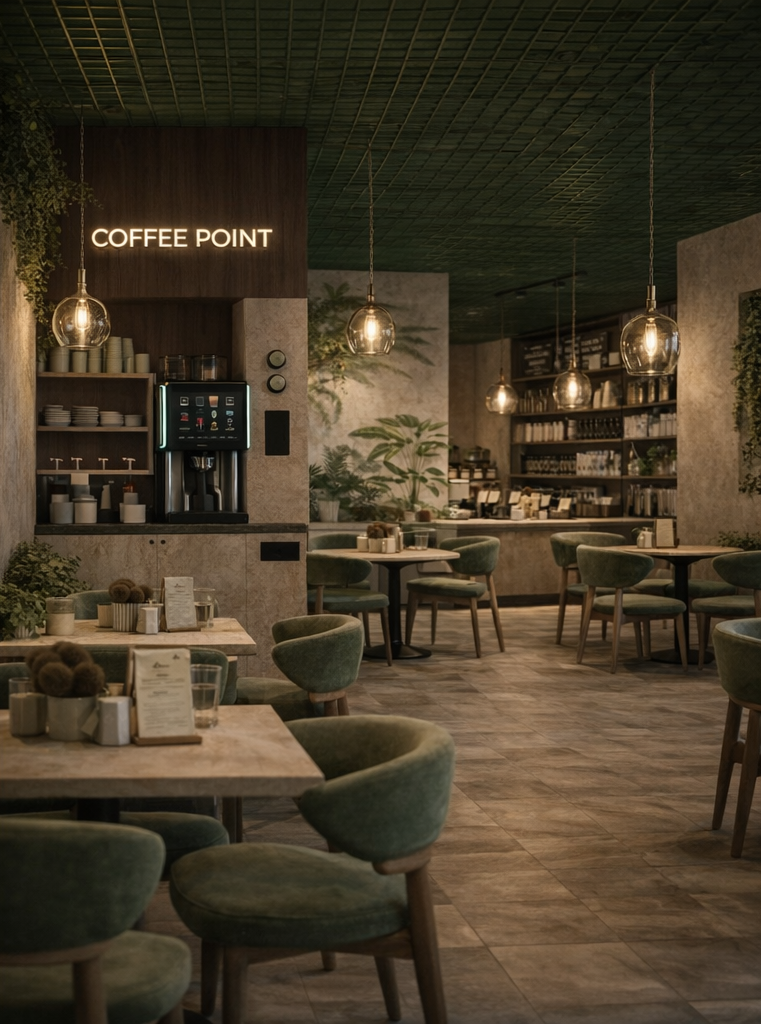
The green mesh ceiling is conceived as a “suspended landscape” rather than a mere technical element. Its layered structure creates visual depth, subtly referencing the dappled light of a natural canopy. Beyond aesthetics, it contributes to acoustic performance, mitigating reverberation and enhancing spatial comfort.
This ceiling transforms the room from a conventional enclosed box into a semi-open interior environment — a controlled interpretation of nature within an urban setting.
Furniture as Spatial Instruments
The seating design is integrated into the architectural language rather than treated as detachable furniture. The curved, velvet-upholstered chairs create rhythmic patterns across the floor plane, guiding movement while establishing intimate micro-spaces.
Table placement respects personal distance while maintaining visual continuity across the room, ensuring that no single area feels isolated or overcrowded. The furniture layout reinforces a balance between sociability and privacy.
Light as an Architectural Medium
Lighting is treated as a primary design material. Pendant fixtures with transparent glass shades provide warm, localized illumination, emphasizing texture and depth without overwhelming the space. Their vertical alignment creates a rhythmic sequence that echoes the structural order of the ceiling grid.
Natural daylight from the façade interacts dynamically with artificial lighting throughout the day, allowing the café to transform subtly in atmosphere from morning to evening subtly.
Context and Urban Relationship
Situated in Al Mouj, the café responds to its waterfront context through a calm yet contemporary architectural language. Rather than competing with its surroundings, Novell L’Espresso integrates into the urban fabric, acting as a contemplative pause within a lively district.
The project exemplifies how small-scale commercial architecture can elevate daily routines into meaningful spatial experiences.
Conclusion — Architecture Beyond Function
Novell L’Espresso demonstrates that a café can transcend its commercial role and become a spatial narrative — one in which material, light, and form collaborate to shape human experience. It stands as an example of how thoughtful architectural design can redefine the everyday.